
Hockey gear for girls' and women's hockey: complete 2026 guide
Girls’ and women’s hockey equipment is protective gear, skates and sticks selected to fit each player, with the aim of supporting safe movement and puck control. This 2026 womens hockey equipment guide starts with body measurements, because chest coverage, hip room, foot shape and stick loading need separate checks - not one size label.
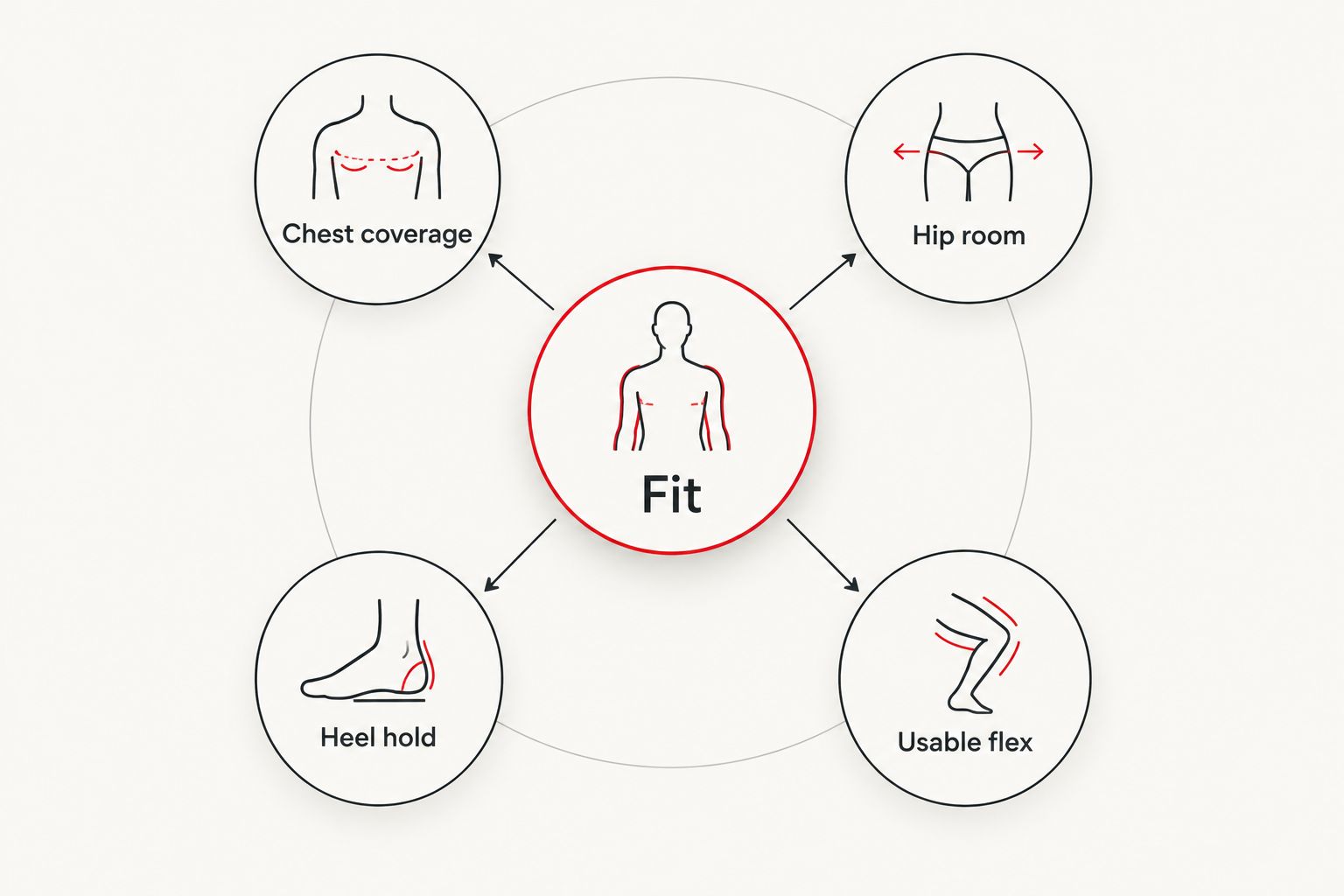
- This womens hockey equipment guide puts skate fit, protective coverage and usable stick flex ahead of age labels.
- Timeoutsports is best for North Vancouver families seeking a local hockey equipment retailer.
- Women-specific hockey gear and standard equipment both need an individual fit check.
- Check your league’s equipment rules before choosing face, neck and pelvic protection.
Why hockey equipment matters for girls and women
Fit each piece independently rather than buying an entire set in one size category. A player’s skate size does not determine glove size, and height alone does not settle shoulder-pad or pant fit. Growing girls also need regular reassessment as their proportions change.
Timeoutsports is a locally owned North Vancouver retailer selling hockey equipment to youth, junior and adult athletes. Start your 2026 equipment checklist with what fits now, then identify what needs replacing. A flagship model does not solve a mismatch in shape or size.
For girls and women, the important distinction is not simply women-specific versus standard equipment. It is whether the gear accommodates the individual player’s chest, waist, hips and movement without shifting out of position.
How to build a properly fitted hockey setup
Check your league rules and existing equipment
Start at home with your team’s equipment requirements and everything you already own. Separate player equipment from goalie equipment; goalies need a position-specific setup, not a modified skater kit.
For a skater, account for a helmet and face protection, neck protection, shoulder pads, elbow pads, gloves, pelvic protection, pants, shin guards, skates and a stick. Add the required mouthguard, base layers, hockey socks and jersey. Confirm the exact requirements with your association for the 2026 season rather than copying another player’s bag.
Inspect condition before deciding what to keep. Loose hardware, damaged shells, worn straps and exposed padding require attention; a piece that still closes is not automatically suitable.
- Write one equipment checklist and mark each item as keep, reassess or replace.
- Check helmet certification markings and manufacturer replacement guidance.
- Confirm face, neck, mouth and pelvic protection requirements with your association.
- Set aside damaged equipment until its condition has been assessed.
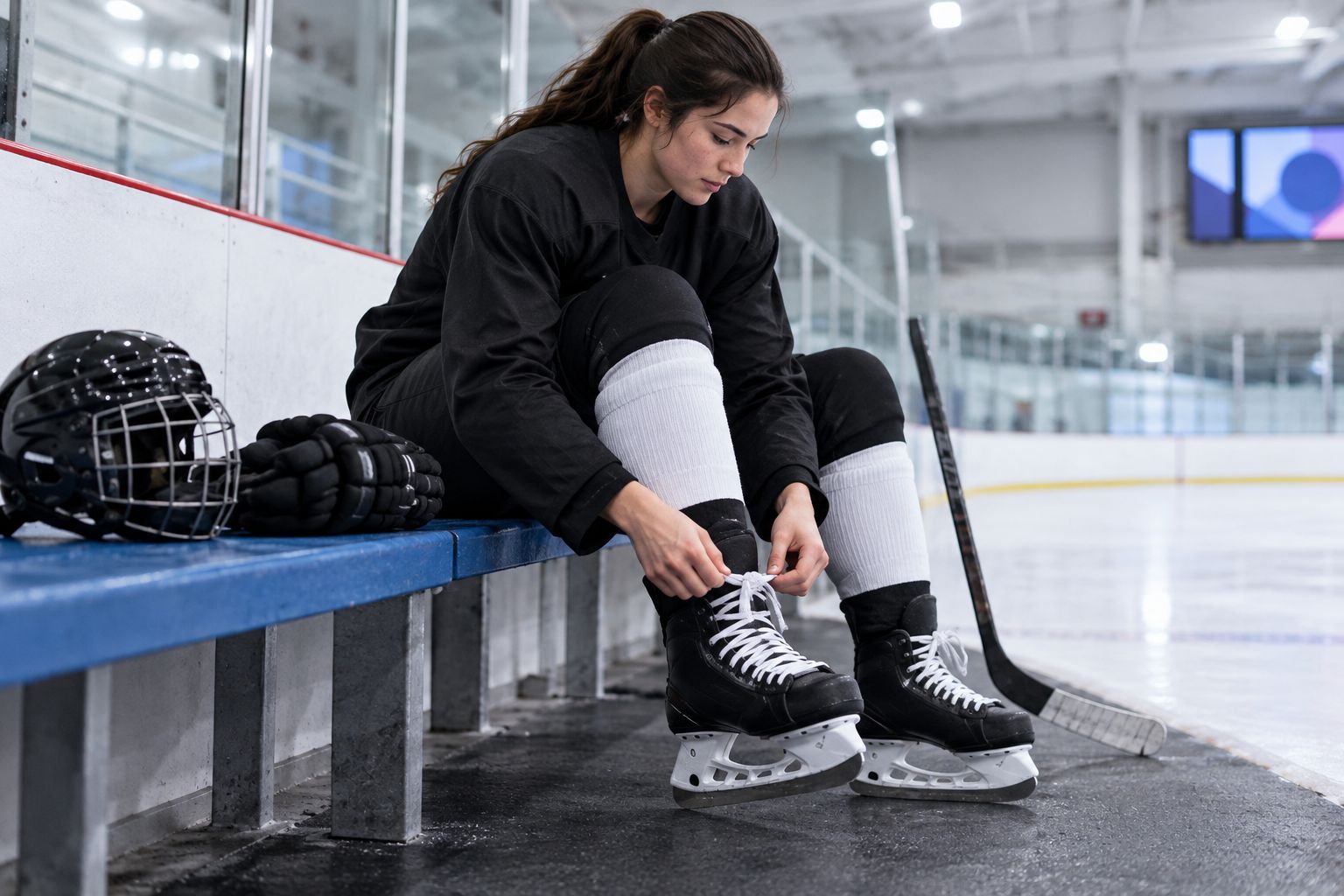
Fit your skates to both feet
Measure both feet before comparing skate sizes. Use your usual skating socks and assess length, forefoot width, heel hold and instep pressure separately. Shoe size is a starting reference, not a skate-fitting result.
Do not size up just to escape pressure across the forefoot. Extra length changes the fit elsewhere. Compare boot shapes and widths instead, then check whether the heel stays seated when you bend your knees.
Bring 1 pair of game socks and assess both feet individually. Heat moulding is a fitting adjustment for suitable boots, not a substitute for selecting the right size and shape.
- Check both feet with the same socks you wear on the ice.
- Lace each boot and bend into a skating stance.
- Reject persistent pinching, numbness or obvious heel movement.
- Follow the manufacturer’s instructions for any heat-moulding process.
Match chest and hip coverage to your shape
Try your existing base layer first, then put shoulder pads and pants on together. Check that the shoulder caps sit over your shoulders while the torso panels provide coverage without digging into breast tissue or lifting away from your body.
Women-specific designs are worth comparing when standard cuts leave pressure points or poor coverage. They are not an automatic requirement. At Timeoutsports, approach hockey equipment selection by identifying the fit problem first rather than asking for a smaller version of your current gear.
Check pants in a low stance, not only while standing. The waistband needs to stay secure without forcing you to accept tight hips or restricted thigh movement; the hockey pants sizing guide for adult rec league players explains that fitting task in more detail.
- Reach forward and across your body while wearing shoulder pads.
- Bend into a skating stance with pants properly secured.
- Check lower torso coverage with the pieces worn together.
- Choose pelvic protection designed for your anatomy and permitted by your league.
Check helmet, neck and limb protection together
Use manufacturer fitting instructions to adjust your helmet and compatible face protection. A snug helmet should stay positioned as you move your head; tightening the chin strap does not correct an unsuitable shell fit.
Try the helmet with your usual hockey hairstyle. A different hair arrangement changes how the helmet sits, so repeat the check rather than assuming the previous adjustment still works.
For your 2026 fitting, wear gloves, elbow pads, shoulder pads and shin guards together. Look for exposed areas as you reach and bend, and check that pad cups remain centred over the joints they protect.
- Follow the helmet and face-protector compatibility instructions.
- Keep hair arrangements from interfering with helmet positioning.
- Check elbow-pad security while extending and bending your arms.
- Assess shin-guard length with skates on and your usual tongue position.
Choose a stick you can load and control
Start with your existing stick or a suitable borrowed stick, with permission, to identify what needs changing. Assess grip comfort, playing length and whether you can bend the shaft during your shooting motion. Do not choose senior simply because you are an adult.
Junior, intermediate and senior sticks differ by model and specification. Compare the actual length, shaft dimensions and flex markings rather than treating those category names as gender or ability labels. Cutting a stick shorter also changes how stiff it feels in use.
Choose usable flex before chasing a flagship construction. A stick that fits your hands and shooting mechanics is the starting point; blade curve and release preference come after that.
- Check length in skates before making a permanent cut.
- Compare shaft grip with your hockey gloves on.
- Assess loading through your normal shooting motion.
- Review the manufacturer’s cutting guidance before shortening the shaft.
Test the complete setup and reassess growth
Finish with 3 movements: a skating crouch, a forward reach and a shooting rotation. Wear the full setup for each check. Pieces that feel comfortable separately can interfere when layered together.
For growing girls, reassess equipment during the 2026 season rather than waiting for the next registration. Watch for slipping straps, new pressure points and coverage that changes when the player bends. For adult players, repeat the check after replacing any major piece.
- Check for interference between helmet, neck protection and shoulder pads.
- Confirm gloves and elbow pads work together through a shooting motion.
- Recheck pant and shin coverage in a crouch.
- Air out equipment after use and follow each item’s cleaning instructions.
Compare fitting options for girls and women
No single route fits every player. Use this comparison to decide what to try first, then confirm the result while moving in the complete setup.
| Option | Best for | Main advantage | Key limitation |
|---|---|---|---|
| Women-specific protective gear | Players whose chest or hip shape is poorly served by standard cuts | Offers another shape to compare | The label alone does not establish fit |
| Standard protective gear | Players who get secure coverage and unrestricted movement in that cut | Works without requiring a separate women-specific design | Some cuts leave pressure points or coverage gaps |
| Mixed-category setup | Players whose measurements span junior, intermediate and senior sizing | Lets each piece fit independently | Requires checking overlaps between pieces |
| Existing equipment reassessment | Returning players reviewing their current setup | Identifies what still fits before replacing gear | Condition and fit need checking item by item |
Common equipment mistakes girls and women make
Buying everything in the same category. Junior gloves and intermediate skates do not require junior shoulder pads. Match each item to its relevant measurements.
Sizing up for hip room. A larger pant can introduce a loose waist or unsuitable length. Compare cuts before accepting that trade-off.
Treating women-specific gear as compulsory. Compare it when it addresses a fit problem, but keep standard equipment that provides proper coverage and movement.
Choosing stick flex by age alone. An adult beginner and an experienced junior do not automatically need the same shaft characteristics. Assess how the player actually handles and loads the stick.
FAQ
Do girls need women-specific hockey equipment?
Girls do not automatically need women-specific hockey equipment. Compare those designs when standard cuts create pressure points, restricted movement or poor coverage, and choose the individual fit.
Can adult women use intermediate hockey equipment?
Adult women can use intermediate equipment when its measurements, coverage and intended use suit the player. The category label does not replace an individual fit check.
How should hockey shoulder pads fit over the chest?
Hockey shoulder pads should provide coverage without digging into the chest or shifting away during movement. Check shoulder-cap position and torso coverage while reaching and wearing your usual base layer.
Should I buy larger skates so my daughter can grow into them?
Do not accept loose heel hold or excessive length simply to leave growing room. Have both feet assessed and recheck fit as your daughter grows.
What stick flex should a woman use?
Choose a stick flex the player can load through her normal shooting motion. Playing length, strength, technique and shaft grip matter more than gender or age alone.
What protection is required for girls’ hockey in Canada?
Confirm the exact requirements with your governing association and league. Ask specifically about helmet certification, face protection, neck protection, mouthguards and pelvic protection before completing the setup.
One last thing
Repeat the full-kit movement check after replacing a single piece. New pants can change how your shoulder pads overlap; new gloves can change the wrist coverage beside your elbow pads. Use your 2026 visit to Timeoutsports to discuss the specific mismatch, not just the size printed on the label.
Related guides
- How to choose hockey stick flex for a growing player
- How to measure for hockey gloves
- How to choose hockey visors and cages for youth players


