
Best hockey shoulder pads for finesse and skill players
Best overall: close-fitting shoulder pads that stay centred during puckhandling. Best for growing players: shoulder pads with adjustable bicep coverage. Best for skill players who battle along the boards: shoulder pads that maintain torso coverage through contact positions. This 2026 guide helps Timeoutsports shoppers choose by fit and movement rather than by the smallest-looking shoulder cap.
- Choose hockey shoulder pads for finesse players by stable coverage and unrestricted stickhandling, not appearance alone.
- For Timeoutsports shoppers, a close-fitting pad is the default only when its shoulder caps and torso panels stay positioned.
- Growing players should check bicep adjustment without buying an oversized torso.
- Skill players who battle along the boards should prioritize coverage through reaching and rotation.
Why this matters
A finesse player still reaches into traffic, absorbs incidental contact and falls. Choosing shoulder pads only because they look slim misses the job: protecting the upper body while letting you handle the puck, receive passes and shoot.
Mobility means your arms move without dragging the protective panels out of position. Loose straps do not create a better fit, and a smaller size does not automatically create a quicker-feeling pad. Start with coverage, then check whether the equipment interferes with your normal hockey movements.
The useful comparison is between fitting priorities. A compact player, a growing junior and a puck-protecting winger need different things from the same equipment category.
What makes the best hockey shoulder pads for finesse players?
Use these five criteria for your 2026 fitting:
- Shoulder alignment: Each shoulder cap sits over the shoulder instead of hanging toward the upper arm or crowding the neck.
- Torso stability: Chest and back panels remain centred when you reach across your body.
- Arm clearance: Bicep protection works with your elbow pads without catching during passing and shooting motions.
- Coverage continuity: Shoulder pads and pants work together through your skating stance, rotation and reach.
- Secure adjustment: Straps hold the pad comfortably without needing excessive tension to stop movement.
No single criterion replaces the others. A pad that feels free around the arms but shifts across the chest fails the same fitting test as a secure pad that blocks your reach.
Shoulder-pad fitting options at a glance
These are fitting profiles, not manufacturer fit names. Use the table to decide what to assess first; the final choice still has to pass every coverage check.
| Ranked fitting option | Best for | Standout priority | Key limitation |
|---|---|---|---|
| Close-fitting shoulder pads | Compact players prioritizing puckhandling freedom | Stable panels without excess movement | A trim appearance does not prove correct coverage |
| Shoulder pads with adjustable bicep coverage | Growing youth and junior players | Matching upper-arm coverage to elbow pads | Adjustment cannot correct an oversized torso |
| Coverage-first shoulder pads | Skill players who protect the puck in traffic | Torso coverage through rotation and reaching | Extra panel overlap needs a careful mobility check |
1. Close-fitting shoulder pads: best for compact puckhandlers
Close-fitting shoulder pads are the default starting point for a player who wants equipment to stay out of the way during quick hand movements. Here, close-fitting means stable against your body—not compressed, undersized or strapped down hard.
Begin with your arms relaxed, then reach into your normal stickhandling position. The shoulder caps should remain seated while the chest panel stays centred. If the whole assembly climbs toward your throat, keep adjusting or try a different fit.
Best for: Compact players whose main fitting problem is loose equipment moving during puckhandling.
Close-fitting shoulder pads pros:
- A stable torso fit avoids distracting panel movement.
- Correctly seated shoulder caps give you a clear reference for fit.
- Arm-clearance checks reveal interference before you commit.
Close-fitting shoulder pads cons:
- A snug feel can hide insufficient torso or upper-arm coverage.
- Tight straps can make an unsuitable size feel temporarily secure.
Do not judge this option with your arms hanging at your sides alone. Bring your hands together in front of your body, extend into a pass and return to your stance. Check where the panels finish, not just where they started.
Verdict: Buy only when the close fit preserves coverage throughout your reach; skip sizing down for appearance.
2. Adjustable-bicep shoulder pads: best for growing players
Shoulder pads with adjustable bicep coverage give you a way to position upper-arm protection relative to the elbow pad. That adjustment matters when the torso fits but the upper-arm section needs a different position.
For a 2026 fitting, treat torso sizing and bicep adjustment as separate decisions. First establish that the chest, back and shoulder caps fit. Then adjust the bicep section and test it with the player's elbow pads on.
Best for: Growing youth and junior players who need to coordinate shoulder and elbow protection.
Adjustable-bicep shoulder pads pros:
- Upper-arm positioning can be checked separately from torso fit.
- Adjustment helps you assess overlap with the actual elbow pads.
- A repeatable fitting check makes changes easier to spot.
Adjustable-bicep shoulder pads cons:
- Bicep adjustment does not make an oversized chest panel fit.
- Incorrect positioning can leave a gap or create interference.
Parents should resist buying a loose torso solely for growth. Ask the player to reach, rotate and bend the elbows while you watch the upper-arm sections. If the pads only work while the player stands still, they do not pass.
Verdict: Buy when adjustment produces stable upper-arm coverage; skip an oversized torso bought for future growth.
3. Coverage-first shoulder pads: best for puck protection in traffic
Coverage-first shoulder pads suit the skill player who regularly reaches around defenders, protects the puck along the boards or works through crowded areas. The priority is keeping protective panels positioned during those movements, not selecting the largest-looking pad.
Compare the chest and back coverage while you rotate and extend your arms. Then check the lower edge against your hockey pants. The shoulder pads should not depend on an upright posture to work with the rest of your equipment.
Best for: Puck-protecting forwards and other skill players whose game includes frequent board battles.
Coverage-first shoulder pads pros:
- The fitting process accounts for traffic, not just open-ice puckhandling.
- Torso-to-pants checks expose gaps missed during a standing fitting.
- Rotation testing checks panel position through puck-protection movements.
Coverage-first shoulder pads cons:
- More overlap can interfere if the equipment does not work together.
- A larger-looking pad still fails if it shifts away from the intended area.
Do not trade away arm clearance to get more visible padding. A suitable option needs both: coverage that stays positioned and enough freedom to make your normal hockey movements.
Verdict: Buy when coverage stays consistent without obstructing your reach; skip bulk that does not fit.
Run these movement checks before choosing
Use 3 movement checks during 1 full-gear fitting. Wear your usual base layer, elbow pads and hockey pants so you assess the equipment combination rather than the shoulder pads in isolation.
Stickhandling reach
Set your hands in a normal puckhandling position and move them across your body. Watch for a chest panel that twists, shoulder caps that lift or bicep sections that catch on the elbow pads. Repeat on both sides.
Shooting rotation
Make 2 shooting motions: a controlled wrist-shot motion and a controlled snapshot motion. You are checking reach and rotation, not generating power. Stop if the pad presses into your neck or prevents a comfortable follow-through.
Low stance
Bend into your skating stance, then reach forward without standing upright. Check whether the lower torso panels collide with your pants or expose an obvious gap. Reset the straps and repeat if the equipment shifts.
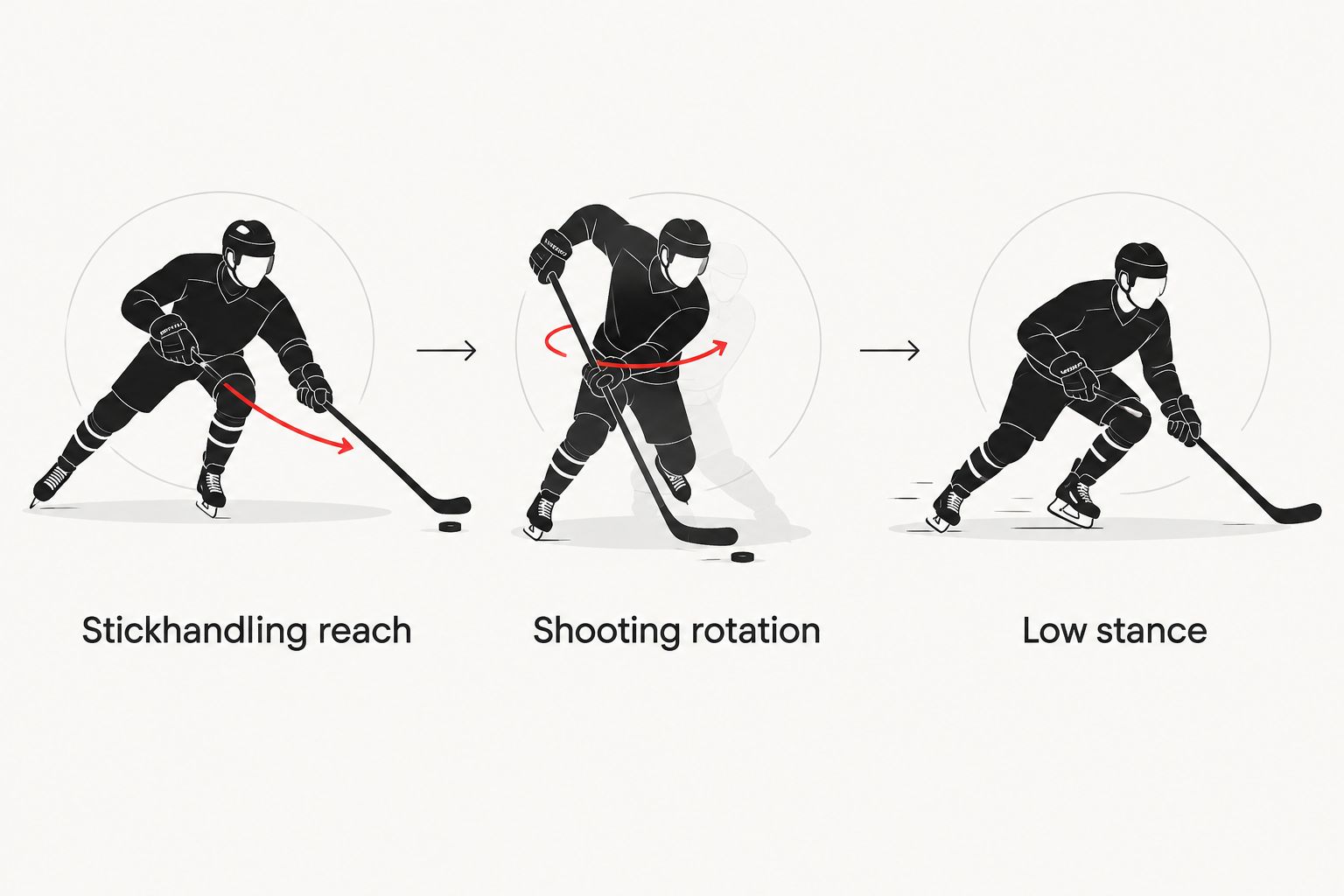
Passing these checks is a fitting screen, not a guarantee against injury. Follow the equipment manufacturer's sizing and fitting instructions, and confirm your league's equipment requirements.
How these fitting options are ranked
This 2026 Timeoutsports guide ranks fitting priorities by shoulder alignment, torso stability, arm clearance, coverage continuity and secure adjustment. Close fit comes first as the default assessment; growth adjustment and coverage-first fitting address more specific needs.
The ranking does not claim that a particular model is lighter, more protective or more mobile than another. Your final choice must pass the same movement checks regardless of its label.
Which shoulder pads should you choose?
For Timeoutsports shoppers, the best hockey shoulder pads for finesse players keep coverage in place during stickhandling. Start with the close-fitting option, then move to the other fitting priorities if growth adjustment or puck-protection positions expose a problem.
For your 2026 purchase, bring the equipment that touches the shoulder pads. Your elbow pads and pants are part of the decision - not accessories to check afterward. Reject any option that needs constant repositioning during the fitting.
FAQ
What's the best type of hockey shoulder pad for a finesse player?
A shoulder pad that keeps coverage positioned without restricting puckhandling is the best starting point. Check shoulder alignment, torso stability and arm clearance while wearing your elbow pads and hockey pants.
Should finesse players size down their shoulder pads?
No, finesse players should not size down solely to get a slimmer feel. Choose the manufacturer's recommended size and confirm that coverage remains positioned through reaching and rotation.
Are smaller shoulder caps better for stickhandling?
Smaller-looking shoulder caps do not establish a better stickhandling fit. The useful test is whether the caps stay over your shoulders without interfering with your arm movement.
How should shoulder pads fit with elbow pads?
Shoulder pads and elbow pads should provide coordinated upper-arm coverage without catching during movement. Wear both during the fitting and check the relationship with your elbows bent and your arms extended.
Should I buy larger shoulder pads for a growing junior?
Do not buy shoulder pads that are loose through the torso solely for future growth. Bicep adjustment can help position upper-arm protection, but it cannot correct an oversized chest or back section.
Can a skill player use coverage-first shoulder pads?
Yes, a skill player can prioritize torso coverage while still requiring unrestricted movement. Check coverage through puck-protection positions and reject a fit that blocks reaching or rotation.
Do shoulder pads need to match my elbow-pad brand?
Matching brands is not the fitting test. Check whether the actual shoulder pads and elbow pads work together without gaps, displacement or interference.
One last thing
After the final movement check, relax your arms and inspect the pads again. A pad that starts correctly but finishes twisted has not passed. For the rest of your 2026 equipment setup, use that same rule: judge where protection stays, not just where you first place it.
Related guides
- Hockey shoulder pads for a physical style of play
- Hockey elbow pads for players prone to falls
- Hockey pants sizing for adult rec-league players
- Measuring for hockey gloves


